Why Tyre Size Matters
Fitting the wrong tyre size can affect your car’s handling, fuel efficiency, speedometer accuracy, and most critically — safety. Tyre size is not a suggestion; it is an engineering specification set by your vehicle manufacturer.
When you understand tyre size markings, you can verify the tyres being installed are correct, compare options intelligently, and have an informed conversation with your tyre dealer.
Did You Know?
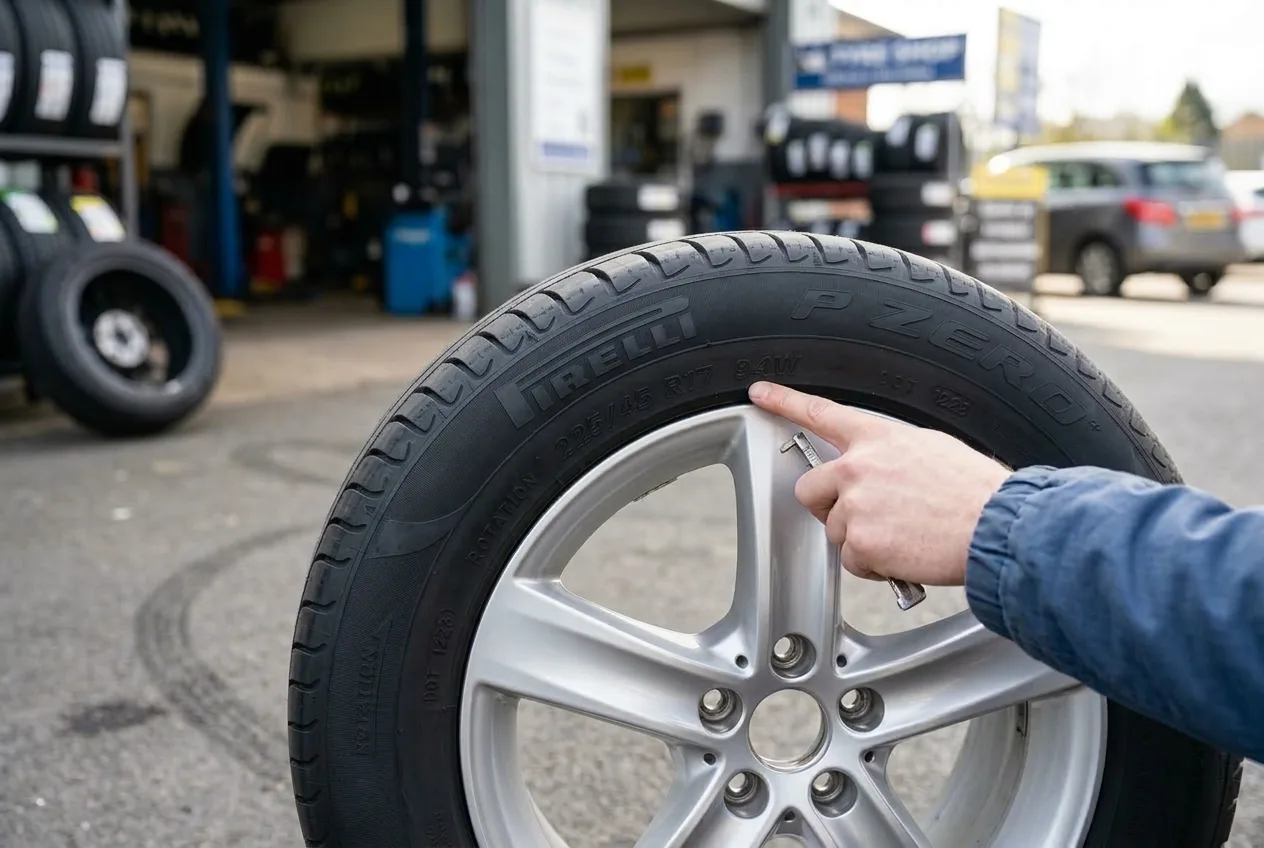
You can find your correct tyre size in 4 places: the tyre sidewall itself, your owner’s manual, the driver’s door frame sticker, and sometimes inside the fuel lid.
Where Can You Find Tyre Size?
Always cross-reference your vehicle’s recommended specification before purchasing. The size on the old tyre may not always be correct if a previous owner made changes.
The Certified Standard
The tyre size marked on your vehicle’s door sticker is the manufacturer’s tested, certified specification. Deviating significantly from it affects braking, handling, speedometer accuracy, and safety.
Understanding Tyre Size Markings
Take the example: 205/55 R16 91V. Each part of this code has a specific meaning.
Tyre Width — 205
The first number is the tyre width in millimetres, measured from sidewall to sidewall. In our example, 205 means the tyre is 205 mm wide. Common widths range from 155 mm (small hatchbacks) to 275 mm+ (performance SUVs). A wider tyre generally offers more grip but can reduce fuel efficiency.
Aspect Ratio — 55
The number after the slash is the aspect ratio — the ratio of the tyre’s sidewall height to its width, expressed as a percentage. A 55 aspect ratio means the sidewall height is 55% of 205 mm = approximately 113 mm. Lower aspect ratios (like 35 or 40) give a sportier look and sharper handling; higher ratios (like 60 or 65) provide more comfort and cushioning on rough roads.
Construction Type — R
The letter “R” stands for Radial construction — the standard in modern tyres. Radial tyres have cord plies that run perpendicular to the direction of travel, providing better flexibility, longer life, and improved fuel economy compared to older bias-ply designs. You will almost never see anything other than R on a modern car tyre.
Rim Diameter — 16
This number indicates the diameter of the wheel rim in inches that the tyre is designed to fit. A 16 means the tyre is designed for a 16-inch rim. This must match your wheel exactly — a tyre rated for a 16-inch rim cannot be fitted to a 17-inch rim. Common sizes range from 14 inches on economy cars to 22 inches on luxury SUVs.
Load Index — 91
The load index is a numerical code that indicates the maximum load a tyre can carry when properly inflated. A load index of 91 corresponds to a maximum load capacity of 615 kg per tyre. Never fit tyres with a lower load index than your vehicle manufacturer specifies.
Speed Rating — V
The speed rating is a letter code indicating the maximum sustained speed the tyre is designed for. “V” corresponds to 240 km/h. Speed rating also influences handling characteristics — higher-rated tyres generally have stiffer compounds that improve responsiveness. Always match or exceed your vehicle’s required speed rating.
Can You Change or Upsize Tyre Size?
Upsizing — fitting a wider or larger tyre than the OEM specification — is popular for aesthetic reasons, but it comes with trade-offs. When upsizing, the overall diameter of the tyre must remain approximately the same to avoid affecting the speedometer, ABS calibration, and ground clearance.
A common approach is to go one step wider and reduce the aspect ratio to compensate (e.g., moving from 205/55 R16 to 215/50 R16). This is called plus-sizing and keeps the overall rolling diameter close to the original.
Safety Requirement
Never use a lower load index or speed rating than specified. This is a safety requirement — not a preference. Upsizing should always be done by a certified tyre expert, never guesswork.
Choosing the Right Tyres
Once you understand your tyre size, the next step is choosing the right product within that specification. Consider your driving conditions — city commuting, highway driving, or performance use — as well as your priorities around noise, comfort, and longevity.
Pirelli’s range offers specific products optimised for each use case: the Cinturato series for everyday comfort and fuel efficiency, the P Zero for performance, and the Scorpion series for SUVs and crossovers.
Why Buy from an Authorized Dealer
Purchasing from an authorised dealer like Radial Factory ensures you receive genuine tyres with valid manufacturer warranties, correct storage, and professional fitting. Counterfeit tyres are a real risk in the market — they may look identical but lack the safety engineering of genuine products.
Our technicians can verify the correct size for your vehicle and guide you through the best options within that specification.
Frequently Asked Questions
Can I fit a different size tyre on my car?
Minor variations are possible, but you must keep the overall diameter close to the original specification. Significant changes affect speedometer accuracy, ABS, and safety systems. Always consult a certified tyre dealer before changing size.
What does the DOT code on the sidewall mean?
The DOT code is a US Department of Transportation safety certification. The last four digits indicate the week and year of manufacture — for example, “2423” means the 24th week of 2023. This tells you the age of the tyre.
Do all four tyres need to be the same size?
In most cases, yes. Using different sizes on the same axle is dangerous and can affect handling, stability control, and AWD/4WD systems. Some performance cars use a staggered setup (wider rears), but this is a factory specification, not an aftermarket change.
Final Thoughts
Understanding your tyre size is the foundation of every good tyre buying decision. When in doubt, our team at Radial Factory is available at the Banjara Hills showroom to help you find the right tyre for your specific vehicle and driving needs.