What Is Wheel Alignment?
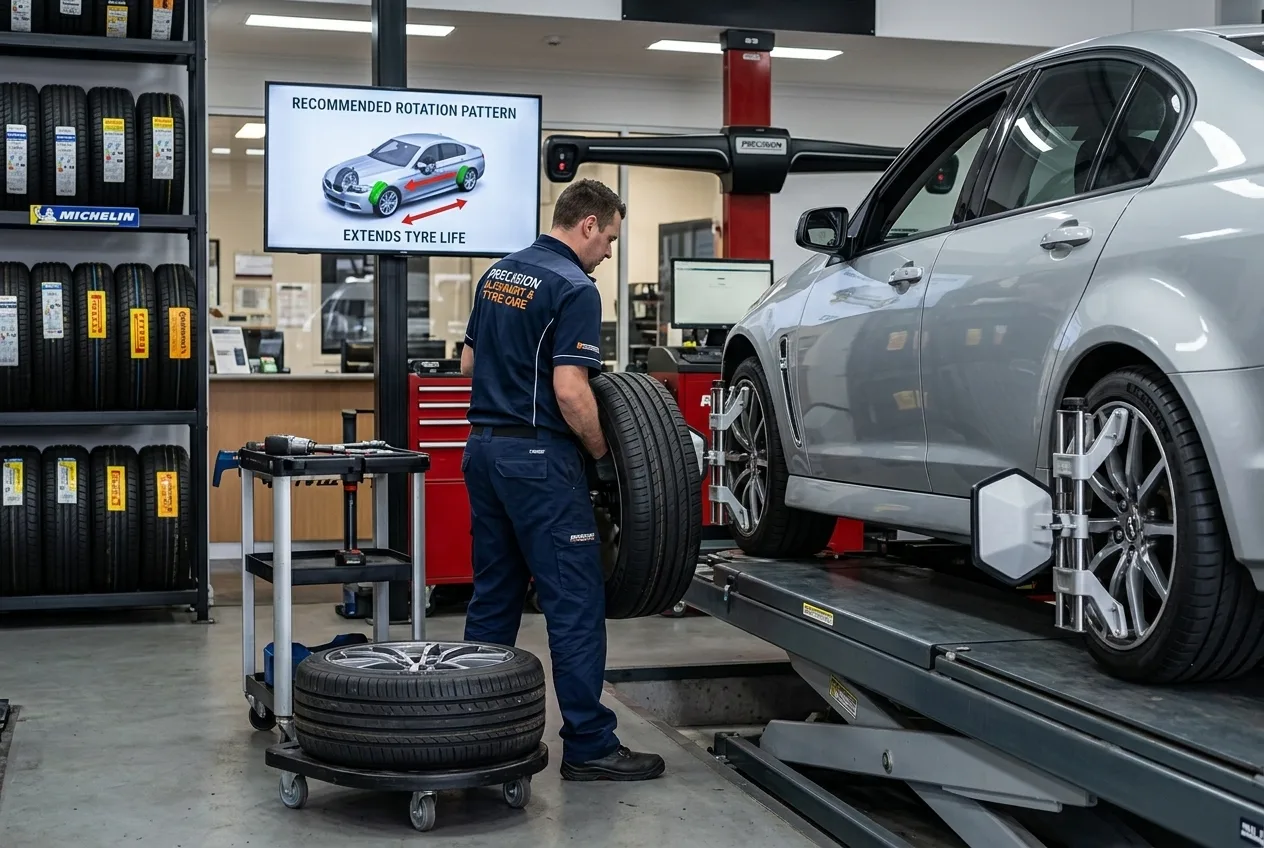
Wheel alignment refers to the adjustment of a vehicle’s suspension — the system that connects the vehicle to its wheels. It is not an adjustment of the tyres or wheels themselves, but of the angles at which the tyres contact the road. When these angles are set correctly, the vehicle drives straight, tyres wear evenly, and the steering feels accurate and responsive.
Alignment shifts over time due to normal use and is accelerated by potholes, kerb strikes, and rough roads — all common in India. A computerised alignment machine measures the current angles against the manufacturer’s specifications and adjustments are made accordingly.
The Tyre-Killer
Misaligned wheels can eat through a tyre in as little as 10,000 km — a tyre that should have lasted 50,000 km. A single bad pothole is enough to knock your alignment out.
Key Alignment Angles Explained
Camber
Camber is the tilt of the tyre when viewed from the front. Positive camber means the top of the tyre leans outward; negative camber means it leans inward. Most passenger cars run a slight negative camber to improve cornering grip. Excessive negative or positive camber causes accelerated wear on the inner or outer edge of the tyre respectively.
Toe
Toe refers to the direction the tyres point when viewed from above. Toe-in means the fronts of the tyres point slightly inward; toe-out means they point outward. Incorrect toe alignment causes rapid, feathered or one-sided tyre wear and makes the car drift to one side. Toe is the most common alignment issue and the one most frequently corrected.
Caster
Caster is the angle of the steering axis when viewed from the side. Positive caster (the steering axis tilts toward the driver) promotes straight-line stability and steering return-to-centre after a corner. Too little or negative caster makes the steering feel vague and unstable at speed.
Common Confusion — Know the Difference
Wheel balancing and wheel alignment are NOT the same thing. Balancing fixes vibration (weight distribution). Alignment fixes steering pull and uneven wear (wheel angles). Both are needed — they complement each other but do not substitute for each other.
What Is Wheel Balancing?
Wheel balancing is a separate procedure from alignment. It involves correcting uneven weight distribution around a tyre and wheel assembly. Even a new tyre mounted on a wheel will have slight manufacturing variations that cause one part of the assembly to be heavier than others. When the wheel rotates at speed, this imbalance causes vibration.
Balancing is done by placing the wheel on a balancing machine that identifies where weights are needed, then attaching small metal weights to the rim at precise positions to counteract the imbalance. Tyres should be rebalanced whenever they are removed from the vehicle, and when vibration is noticed.
Why Wheel Alignment Is Important
Prevents rapid and uneven tyre wear that shortens tyre life by up to 30%
Reduces rolling resistance, improving fuel efficiency
Ensures the vehicle drives straight without pulling to one side
Maintains precise steering response and vehicle handling
Reduces stress on suspension and steering components, preventing premature wear
The Smart Schedule
Get alignment checked every 10,000–15,000 km, or immediately after hitting a significant pothole or kerb. It costs a fraction of what a prematurely worn tyre does.
Alignment vs Balancing — Key Differences
| Factor | Wheel Alignment | Wheel Balancing |
|---|---|---|
| What is adjusted | Suspension angles | Weight distribution on rim |
| Main symptom if needed | Car pulls to one side | Vibration at speed |
| Effect on tyres | Uneven one-sided wear | Scalloped/cupped wear |
| Recommended frequency | Every 10,000–15,000 km | Every tyre change or when vibration felt |
Signs You Need Wheel Alignment
Vehicle drifts or pulls to the left or right on a flat, straight road
Steering wheel is not centred when driving straight
Uneven or rapid tyre wear on one side or edge
Squealing tyres when cornering at low speeds
After hitting a significant pothole or kerb
After replacing suspension or steering components
Indian Road Conditions
India’s roads are particularly hard on alignment. Deep potholes, speed breakers at varying heights, and rough surfaces cause alignment to shift more frequently than on well-maintained European or Japanese roads. In Indian driving conditions, checking alignment every 8,000–10,000 km is advisable, and always after encountering a particularly severe pothole or road hazard.
For SUVs, EVs, and Luxury Cars
SUVs have higher ground clearance but are not immune to alignment issues — their greater weight actually makes the consequences of misalignment more severe in terms of tyre wear. Luxury cars have very precise alignment specifications with tight tolerances; even minor deviations are detectable in the driving experience. EVs should have alignment checked regularly as tyre wear accelerates with their higher torque delivery.
Frequently Asked Questions
Can I check alignment myself?
You can check for obvious symptoms (pulling to one side, off-centre steering wheel), but accurate alignment measurement and adjustment requires a computerised alignment machine. DIY alignment adjustment is not recommended — even small errors can make handling worse.
If I just bought new tyres, do I need alignment?
Yes — it is highly recommended to check alignment when fitting new tyres. If the alignment is incorrect, new tyres will wear unevenly from day one, shortening their life and wasting your investment.
What is 4-wheel alignment vs 2-wheel alignment?
2-wheel alignment (front only) adjusts only the front axle angles. 4-wheel alignment checks and adjusts all four wheels. Most modern vehicles require 4-wheel alignment as the rear suspension is adjustable. Always opt for 4-wheel alignment unless specifically told your vehicle’s rear suspension has no adjustment.
Final Thoughts
Wheel alignment and balancing are small investments that protect much larger ones — your tyres and your vehicle. Schedule both services at every tyre rotation and always after any significant road impact. Our team at Radial Factory will ensure your wheels are correctly aligned and balanced using proper equipment.