What Is Tyre Pressure?
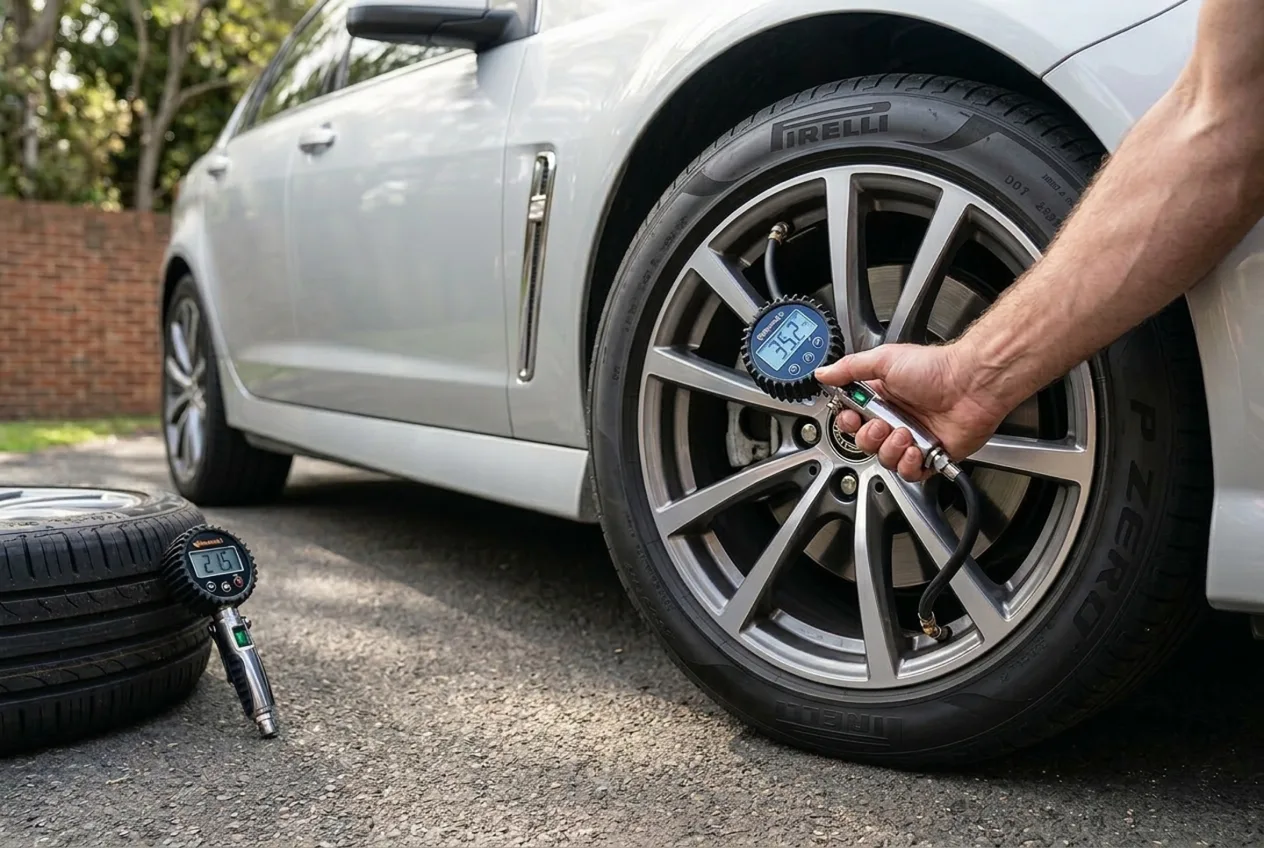
Tyre pressure is the amount of air inside your tyre, measured in PSI (pounds per square inch) or Bar. It is the air pressure that supports the weight of the vehicle and its occupants. The tyre itself is just a container; the load-bearing element is the compressed air inside.
Getting this pressure right — neither too high nor too low — is essential for the tyre to perform as the manufacturer designed. Even a variation of 5 PSI from the recommended pressure measurably affects performance and safety.
The Hidden Danger
A tyre that is just 20% under-inflated increases rolling resistance significantly, wears the tyre unevenly, and raises the risk of sudden blowout — especially at highway speeds.
Where to Find the Correct Pressure
The recommended tyre pressure for your vehicle is specified by the car manufacturer — not the tyre manufacturer. You will find it in:
A sticker on the inside of the driver’s door jamb (most common)
Inside the fuel filler flap on some models
Your vehicle’s owner’s manual
Note that many vehicles specify different pressures for front and rear tyres, and some specify a higher pressure when carrying a full load. Never use the maximum pressure figure moulded onto the tyre sidewall — that is the maximum the tyre can handle, not the recommended operating pressure.
Why Correct Tyre Pressure Matters
Safety and Braking Performance
Correct pressure ensures the tyre’s contact patch — the area touching the road — is the optimal size and shape. Under-inflation causes the contact patch to bulge at the edges and become unstable; over-inflation reduces it and concentrates load at the centre. Both conditions worsen braking performance and reduce grip in corners.
Fuel Efficiency
Under-inflated tyres increase rolling resistance — the force required to keep the tyre rolling. This means your engine must work harder, consuming more fuel. A tyre just 10% under-inflated increases rolling resistance by approximately 5–10%, measurably increasing fuel consumption. Given the current cost of petrol and diesel in India, maintaining correct pressure provides meaningful ongoing savings.
Tyre Life and Wear
Incorrect pressure causes uneven wear. Under-inflation causes shoulder (edge) wear; over-inflation causes centre wear. Either pattern reduces tyre life and forces earlier replacement. Maintaining correct pressure allows the tread to wear evenly across its full width as the manufacturer intended.
Aquaplaning Resistance
An under-inflated tyre cannot channel water away from the contact patch as effectively as a properly inflated tyre. This increases the risk of aquaplaning — where a film of water lifts the tyre off the road surface, causing complete loss of steering and braking control. In India’s monsoon conditions, this is a serious safety concern.
Prevention of Catastrophic Failure
Severely under-inflated tyres generate excessive heat through flexing. This heat can degrade the internal rubber compounds and cause delamination or sudden blowout — particularly at highway speeds. Many tyre blowouts are caused by chronic under-inflation rather than sharp objects.
Fuel Saving Fact
Correct tyre pressure can improve fuel efficiency by 3–5%. Over a year of daily driving, that adds up to a meaningful saving — and it costs nothing to check.
Risks of Incorrect Tyre Pressure
| Condition | Under-Inflation | Over-Inflation |
|---|---|---|
| Wear pattern | Shoulder/edge wear | Centre wear |
| Fuel consumption | Increases (higher rolling resistance) | Slightly decreases |
| Ride comfort | Softer, wallowing feel | Harsh, bumpy ride |
| Risk of failure | High (heat buildup, blowout) | Increased damage from impacts |
| Wet grip | Reduced (aquaplaning risk) | Reduced (smaller contact patch) |
Critical Checking Rule
Never check pressure on hot tyres — heat expands air, giving a falsely high reading. Always measure when the car has been parked for at least 3 hours. If you add air to a hot tyre, you will over-inflate it.
How Often Should You Check Pressure?
Check tyre pressure at least once a month and always before a long journey. Always check tyres when they are cold — after the car has been stationary for at least three hours or driven less than 2 km.
Tips for Indian Road Conditions
India’s high summer temperatures (40°C+) cause tyre pressure to rise during driving. Check pressure in the morning before driving, not after.
Pothole-heavy roads in Indian cities mean tyres are more prone to impact damage when under-inflated — keep pressure at or slightly above the recommended level.
Before long highway trips, inflate to the higher recommended pressure (usually specified for full load) if carrying passengers and luggage.
Use a reliable digital pressure gauge — petrol station gauges are often poorly calibrated.
For SUVs, EVs, and Luxury Cars
SUVs and luxury cars typically carry higher vehicle weights and require higher tyre pressures than standard passenger cars. Electric vehicles are particularly sensitive to tyre pressure because under-inflation increases rolling resistance, which directly reduces range. EV owners should check pressure more frequently — ideally weekly.
Luxury vehicles often specify run-flat tyres, which have reinforced sidewalls and can be driven on at reduced pressure — but these still require pressure monitoring. A run-flat at zero pressure still has a limited distance and speed capability and must be replaced once driven on.
TPMS — Tyre Pressure Monitoring System
Most modern vehicles are equipped with a TPMS (Tyre Pressure Monitoring System) that alerts you when pressure drops significantly below the recommended level. However, TPMS warning lights typically illuminate only when pressure has dropped by 25% or more below the recommended value. By this point, the tyre is already significantly under-inflated and some wear and heat damage may have occurred.
Do not rely solely on TPMS. Regular manual pressure checks with a calibrated gauge remain essential.
Frequently Asked Questions
Should I use the pressure on the tyre sidewall?
No. The figure moulded on the tyre sidewall is the maximum pressure the tyre can handle, not the recommended operating pressure. Always use the pressure specified on your vehicle’s door sticker or in the owner’s manual.
Can I use nitrogen instead of air for tyre inflation?
Nitrogen is slightly more stable than air as it does not expand and contract as much with temperature changes. It also does not contain moisture, which reduces rim corrosion. These are real but modest benefits. Clean, dry air (which is 78% nitrogen anyway) is perfectly adequate for most drivers.
Do front and rear tyres need different pressures?
Often yes. Many vehicles specify different front and rear pressures to account for differences in load distribution. Always check the door sticker for both front and rear specifications and inflate accordingly.
Final Thoughts
Two minutes with a pressure gauge each month can save you thousands of rupees in fuel, tyre wear, and potential repairs. It is the simplest and most overlooked aspect of tyre maintenance — make it a habit.