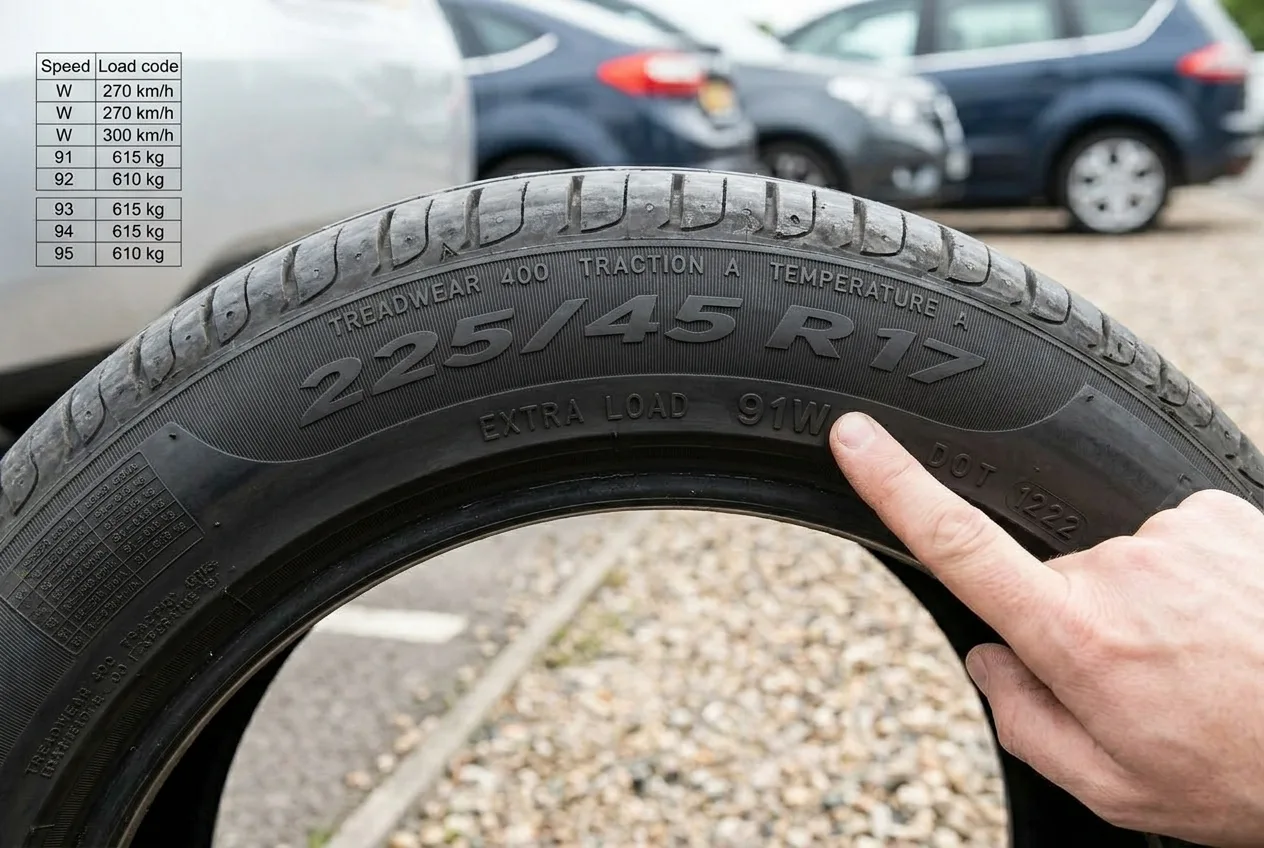
What Is Speed Rating?
The speed rating is a letter code stamped on the tyre sidewall that indicates the maximum sustained speed the tyre is designed to handle safely under its recommended load. It appears as the last character in the tyre marking — for example, in 225/45 R17 94W, the speed rating is W, which corresponds to a maximum of 270 km/h.
The speed rating is not just about top speed — it also reflects the tyre’s heat resistance and handling characteristics at high speeds. Higher-rated tyres generally use stiffer, more thermally stable compounds that also improve responsiveness and cornering precision.
Speed Rating Reference Table
| Speed Symbol | Max Speed (km/h) | Suitable For |
|---|---|---|
| Q | 160 km/h | Light trucks, SUVs (off-road) |
| T | 190 km/h | Economy hatchbacks, family sedans |
| H | 210 km/h | Sedans, SUVs, sport compacts |
| V | 240 km/h | Performance sedans, sport cars |
| W | 270 km/h | High-performance sports cars |
| Y | 300 km/h | Supercars, ultra-high-performance |
The Rule That Cannot Be Broken
Never fit a tyre with a lower speed rating than your vehicle requires. At sustained speeds above the rating, rubber overheats — leading to tread separation or sudden blowout.
Why Speed Rating Matters
Fitting a tyre with a lower speed rating than your vehicle requires is unsafe. At speeds above the tyre’s rating, the rubber compound can overheat, leading to tread separation or sudden blowout. This is not a theoretical risk — it has caused fatal accidents.
You may fit tyres with a higher speed rating than required (e.g., W instead of V) — this is safe and may improve handling. Never fit a lower rating. If mixed speed ratings are used, the lowest-rated tyre limits the safe speed of the entire vehicle.
Performance Tip
Higher speed rating = stiffer compound = better handling. Upgrading to a higher rating is safe and often improves performance.
What Is Load Index?
The load index is a numerical code that represents the maximum weight each tyre can support when properly inflated. It appears before the speed rating letter — in 225/45 R17 94W, the load index is 94, which corresponds to 670 kg per tyre.
For a vehicle with four tyres at load index 94, the total load capacity is 4 × 670 = 2,680 kg. The load capacity must exceed the vehicle’s Gross Vehicle Weight Rating (GVWR) as specified by the manufacturer.
Load Index Reference Table
| Load Index | Max Load (kg) | Typical Vehicle |
|---|---|---|
| 88 | 560 kg | Small hatchbacks |
| 91 | 615 kg | Compact cars, hatchbacks |
| 94 | 670 kg | Mid-size sedans |
| 96 | 710 kg | Sedans, compact SUVs |
| 98 | 750 kg | SUVs, larger sedans |
| 100 | 800 kg | Large SUVs, MPVs |
Why Load Index Is Important
A tyre overloaded beyond its rated capacity generates excessive heat internally, which accelerates rubber degradation and can lead to tread separation or sudden blowout. Consistently overloading tyres — even slightly — shortens their lifespan significantly.
In India, where cars are often fully loaded with passengers and luggage for long highway trips, choosing tyres with an appropriate load index is particularly important. Never downgrade the load index from your vehicle’s specification.
Safety Requirement
Always match or exceed both speed rating AND load index. Going lower on either compromises safety and may void your insurance. This is non-negotiable.
Can You Change Speed Rating or Load Index?
You can fit tyres with a higher speed rating or load index than the minimum required — this is safe and may improve performance. You must never fit tyres with a lower speed rating or load index than specified by your vehicle manufacturer. Doing so compromises safety and may invalidate your insurance.
Choosing the Right Specification for Indian Conditions
Given India’s highway speed limits (up to 120 km/h) and frequent full-load driving on long trips, ensuring adequate load index is at least as important as speed rating. For most Indian cars, a speed rating of H (210 km/h) or V (240 km/h) is standard. Always verify both specifications against your vehicle’s door placard or owner’s manual.
Choosing the Right Tyre
At Radial Factory, our team can help you identify the correct speed rating and load index for your specific vehicle and recommend the appropriate Pirelli product. We stock the full Pirelli range across all common specifications for cars in India.
Frequently Asked Questions
What happens if I fit a tyre with a lower speed rating?
The tyre may overheat at sustained high speeds, leading to tread separation or sudden deflation. It is also illegal in many countries and may invalidate your insurance. Always match or exceed the manufacturer’s required speed rating.
Is a higher speed rating always better?
Higher-rated tyres typically have stiffer compounds that improve handling but may reduce ride comfort. For a city hatchback, there is little practical benefit to fitting a Y-rated tyre. Match the specification to your vehicle’s requirements and driving style.
Where can I find the required load index for my car?
The minimum required load index is specified in your owner’s manual and often on a sticker inside the driver’s door jamb. Your tyre dealer can also look it up from your vehicle’s registration details.
Final Thoughts
Speed rating and load index are non-negotiable safety specifications. Always match or exceed your vehicle manufacturer’s requirements — and when in doubt, speak to a certified tyre expert at Radial Factory before purchasing.