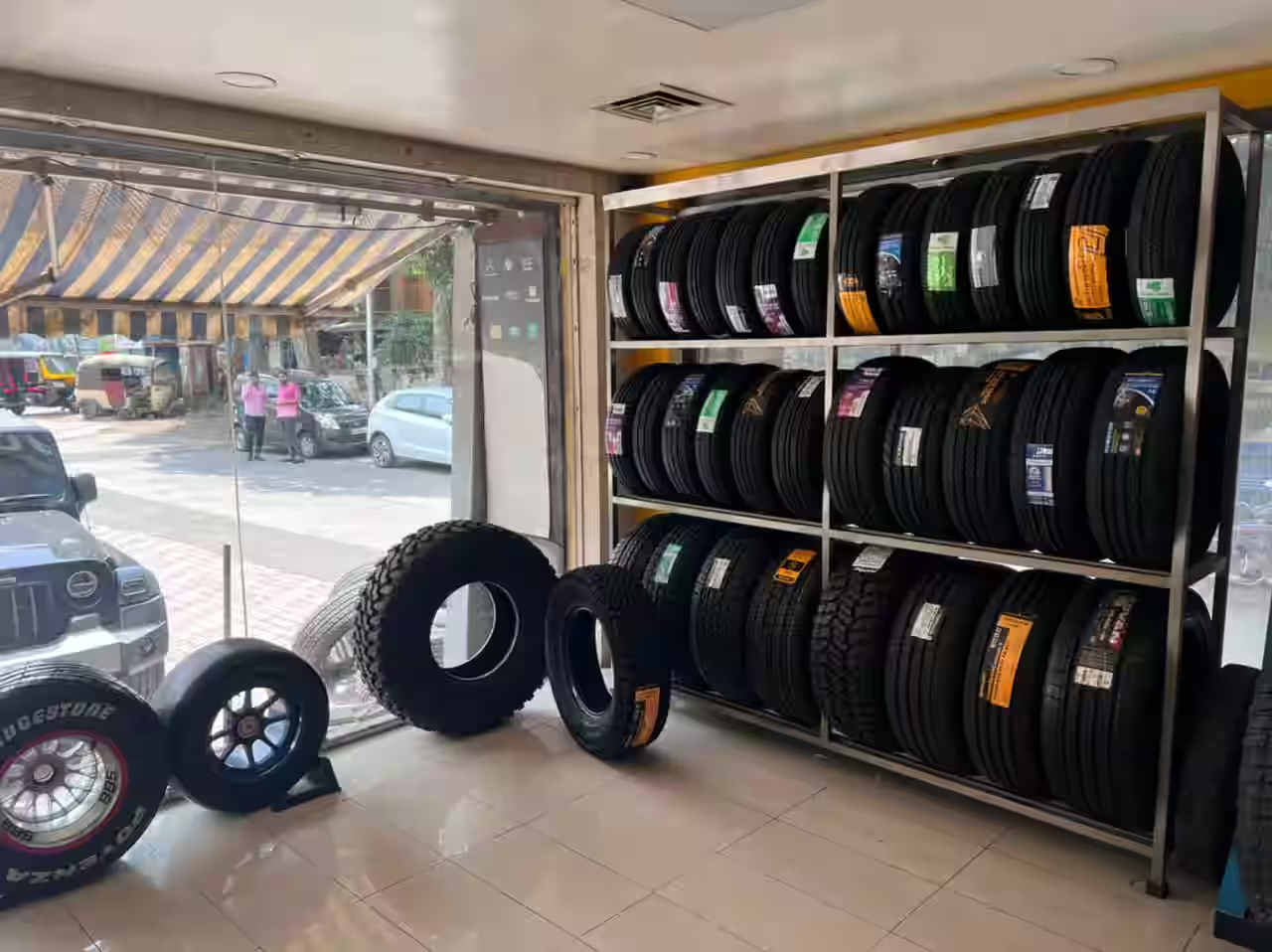
The Costliest Mistake
The most expensive tyre mistake is not paying too much — it’s buying the wrong specification. A tyre with the wrong load index or speed rating is a safety risk regardless of the brand or price.
10 Common Tyre Buying Mistakes
Buying the Wrong Tyre Size
This is the most fundamental mistake. Some buyers rely on what they remember, or what a previous owner told them, rather than verifying the correct size. Always check the tyre size on the door jamb sticker or in the owner’s manual before purchasing. Fitting the wrong size affects speedometer accuracy, braking performance, and in some cases the functioning of ABS and stability control systems. If you want to upsize for aesthetics, consult a certified tyre dealer who can advise on safe plus-sizing options.
Ignoring Load Index and Speed Rating
Two of the most safety-critical specifications are often completely overlooked. The load index tells you how much weight each tyre can safely support; the speed rating tells you the maximum sustained speed. Fitting a tyre with a lower load index or speed rating than your vehicle requires is dangerous and may invalidate your insurance. Always match or exceed your manufacturer’s specifications — never downgrade.
Choosing on Price Alone
Budget tyres may appear to save money upfront, but independent tests consistently show they perform significantly worse than premium tyres in wet braking and handling. The difference in wet stopping distances between budget and premium tyres at 80 km/h can be several car lengths — a gap that can mean the difference between a near-miss and a collision. Premium tyres also typically last longer, making the cost-per-kilometre difference smaller than the initial price suggests.
Buying Old Stock Tyres
Tyres age from the moment they are manufactured, even if unused. Rubber compounds degrade over time, and a tyre that has been sitting in a warehouse for 3–4 years may already have significantly degraded performance. Always check the DOT code on the sidewall before purchasing — the last four digits indicate the week and year of manufacture. Avoid buying new tyres older than 2 years from the manufacture date.
Replacing Only One Tyre
Replacing a single tyre is a false economy unless the others are relatively new (less than 20–25% worn). Mixing a new tyre with significantly worn tyres on the same axle creates unbalanced handling and braking. The new tyre will have more grip than the worn one, causing the car to pull to one side under braking. At minimum, replace in pairs on the same axle. For AWD vehicles, all four may need replacing simultaneously.
Ignoring Driving Conditions
Different tyres are optimised for different conditions. Buying a track-focused performance tyre for city commuting, or a comfort touring tyre for a car frequently used at high speeds on expressways, means you are not getting the right product for your actual use. Consider your typical driving — city/highway mix, long highway trips, monsoon conditions, or primarily dry performance use — and choose accordingly.
Skipping Alignment After Fitting New Tyres
Fitting new tyres without checking alignment is one of the most expensive mistakes you can make. If alignment is off, new tyres will begin wearing unevenly from the first kilometre. You may find that a set of new tyres is worn out on one edge within 15,000–20,000 km instead of the expected 40,000–50,000 km. Always check alignment when fitting new tyres — the cost is small compared to premature tyre replacement.
Buying from Unauthorised Sellers
The tyre market has counterfeit products. Fake tyres — especially fake premium brand tyres — look identical to genuine products but are manufactured without the quality controls, compound engineering, or structural integrity of the real product. They can fail without warning. Always purchase from an authorised dealer with a legitimate supply chain. An authorised dealer will provide a genuine invoice with warranty.
Fitting the Wrong Tyre for a Premium or Performance Car
Many premium and performance vehicles require OEM-specified tyres (identified by markings like ★ for BMW, MO for Mercedes, AO for Audi, N0/N1 for Porsche). These tyres have specific compound and construction characteristics that were developed in collaboration with the car manufacturer. Fitting a generic tyre of the same size to these vehicles changes the handling balance and may affect safety system calibration.
Neglecting Warranty and Documentation
A genuine tyre from an authorised dealer comes with a manufacturer warranty against defects. If you buy without a proper invoice from an authorised dealer, you have no recourse if the tyre fails prematurely due to a manufacturing defect. Always insist on a proper GST invoice that identifies the tyre brand, model, size, and DOT code. This is also important for insurance purposes in the event of an accident.
Always Buy from Authorised Dealers
Always buy from an authorised dealer. Counterfeit and old-stock tyres are indistinguishable to the untrained eye — and they are a serious safety hazard. No price saving is worth the risk.
Quick Buying Checklist
Before buying: Correct size | Right load index & speed rating | Fresh DOT date | Genuine authorised dealer | Alignment & balancing included
Quick Tyre Buying Checklist
Verify tyre size from door jamb sticker or owner’s manual
Check required load index and speed rating — never downgrade
Verify the DOT manufacture date — avoid tyres older than 2 years
Choose a tyre suited to your driving conditions and vehicle type
Replace in pairs at minimum; all four for AWD vehicles
For premium/performance vehicles, verify OEM markings
Schedule wheel alignment immediately after fitting
Purchase only from an authorised dealer with proper invoice
Final Thoughts
Buying tyres is a safety decision, not just a purchasing decision. Avoid these common mistakes and you will get more from your tyres in terms of performance, longevity, and peace of mind. At Radial Factory, our team guides every customer through the right choice for their specific vehicle and needs.